




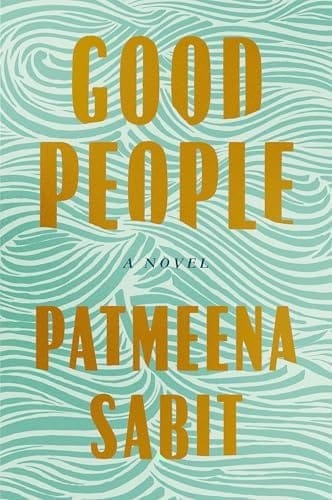

Good People
Zorah Sharaf could do no wrong. Zorah Sharaf brought shame upon her family. What’s the truth? Depends on who you ask.
The Sharaf family is the picture of success. Successful, rich, happy. They came to this country as refugees with nothing more than the clothes on their backs. And now, after years of hard work, they live in the most exclusive neighborhood, their growing family attending the most prestigious schools. Zorah, the eldest daughter, is the apple of her father’s eye.
When an unthinkable tragedy strikes, everyone is left reeling and the family is thrust into the court of public opinion. There is talk that behind closed doors the Sharafs’ happy household was anything but. Did the Sharaf family achieve the American dream? Or was the image of the model immigrant family just a façade?
Like a literary game of ping-pong, Good People compels the reader to reconsider what might have happened even on the previous page. Told through a kaleidoscope of perspectives, it is a riveting, provocative, and haunting story of family—sisters, brothers, mothers, fathers, and the communities that claim us as family in difficult times.
My thoughts:
I received a free audiobook of this title courtesy of the publisher. All thoughts are my own.
This book had me in a chokehold from the minute I started it. I loved the story. I loved the mystery. I loved the format. It seriously plays out like a true crime documentary, complete with multiple perspectives, contradicting testimonies, and no clear answers. Just lots and lots of speculation.
I will warn you, though. If you’re someone who needs your books to end all neat and tidy with everything explained, this may not be the book for you. There are no definitive answers here. But if you like books about complicated family dynamics, perception versus reality, he said/she said narratives, crime and speculation where someone knows the truth but no one is saying it, then this is absolutely the book for you. This book is also told only through interviews/statements and news stories, so if you only like narrative fiction then you should stay away. Honestly, the format is what made it work so well for me.
The Sharaf family looks like the picture of success. They came to this country as refugees with nothing but the clothes on their backs. Now they live in the most exclusive neighborhood. They’re filthy rich. Their kids attend the most prestigious schools. Zorah, the eldest daughter, is the apple of her father’s eye. They’re the perfect family and they’ve achieved the American dream. Or at least they thought they had.
When an unthinkable tragedy strikes and Zorah turns up dead, the family is thrust into the court of public opinion. And suddenly, there’s talk that behind closed doors, the Sharafs’ happy household was anything but. Was the image of the model immigrant family just a facade? Or is this just gossip and assumptions from people who don’t really know them?
The brilliance of this book is in how it’s structured. It’s told through a kaleidoscope of perspectives. Family members. Neighbors. Friends. Teachers. Authorities. News stories. Everyone has a version of what happened. Everyone has a version of who Zorah was. And none of them fully align. Some people say Zorah could do no wrong. Others say she brought shame upon her family. The truth? We never really know.
I went back and forth so many times on what I thought actually happened to Zorah. It’s like a literary game of ping-pong. You’re constantly reconsidering what you thought you knew, even from just a few pages earlier. And that uncertainty is exactly what makes this book so compelling.
What I loved most is how Sabit handles the concept of truth. There’s no omniscient narrator here telling you what really happened. There’s no tidy reveal at the end where everything clicks into place. Instead, you’re left with fragments. Contradictions. Biases. And you have to sit with the discomfort of not knowing for sure. Because in real life, that’s often how these stories go. Someone knows the truth, but no one is saying it. Or maybe everyone is saying their version of the truth, and the real story is somewhere in the middle.
The family dynamics are messy and complicated. The way outsiders view the family versus how family friends view them and how the family views itself all differ. Sabit doesn’t shy away from any of it. She lets it all be complicated and uncomfortable and unresolved.
The book is also emotional and powerful. You feel the grief. You feel the confusion. You feel the anger and the defensiveness and the shame. And you feel the weight of being judged by people who think they know your story but really don’t.
This is Sabit’s debut, and it’s seriously impressive. The format is bold. The writing is sharp. The structure is ambitious and it pays off. She takes a huge risk by not giving readers clear answers, and I think that’s what makes the book stick with you long after you finish it. You keep thinking about it. You keep turning it over in your mind. You keep asking yourself what you believe.
I tandem read this and the audiobook version is fantastic! It’s narrated by a full cast which really helped give that immersive, documentary type feeling.
If you’re drawn to unconventional styles, family secrets, and stories that ask more questions than they answer, pick this up. If you love true crime but want something literary and layered, pick this up. If you’re okay with ambiguity and nuance and books that don’t wrap everything up with a bow, pick this up.
This book won’t be for everyone. But for the right reader, it’s going to hit hard. For me, it absolutely did.
Genre(s):
Other Bookish Tags:
Book Club/Book Box: