





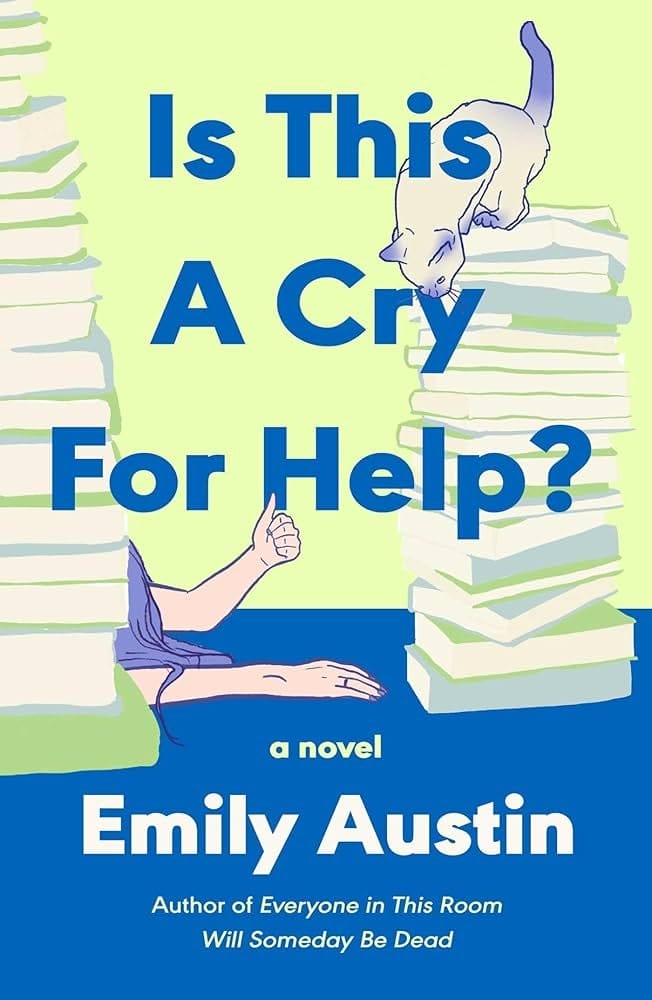

Is This a Cry for Help?
By Emily Austin
Emily Austin, the bestselling “queen of darkly quirky, endearingly flawed heroines” (Sarah Haywood, author of The Cactus), returns with a luminous new novel following a librarian who comes back to work after a mental breakdown only to confront book-banning crusaders in an empowering story of grief, love, and the power of libraries.
Darcy’s life turned out better than she could have ever imagined. She is a librarian at the local branch, while her wife Joy runs a book binding service. Between the two of them, there is no more room on their shelves with their ample book collections, various knickknacks and bobbles, and dried bouquets. Rounding out their ideal life is two cats and a sun-soaked house by the lake.
But when Darcy receives the news that her ex-boyfriend, Ben, has passed away, she spirals into a pit of guilt and regret, resulting in a mental breakdown and medical leave from the library. When she returns to work, she is met by unrest in her community, and protests surrounding intellectual freedom, resulting in a call for book bans and a second look at the branch’s upcoming DEI programs.
Through the support of her community, colleagues, and the personal growth that results from examining her previous relationships, Darcy comes into her own agency and the truest version of herself. Is This a Cry for Help? not only offers a moving portrait of queer life after coming of age but also powerfully explores questions about sexuality, community, and the importance of libraries.
My thoughts:
This book was an automatic “yes” for me when I saw it as an Aardvark offering this month. I read my first Emily Austin book last year and completely fell in love with her characters, so I went into this one with high expectations. Thankfully, I wasn’t disappointed. Once again, Austin delivers a story full of people who feel deeply real, complicated, and familiar in a way that makes you feel like you’ve known them forever.
Darcy’s life, at least on the surface, looks pretty idyllic. She’s a librarian at her local branch, her wife, Joy, runs a bookbinding business, and together they’ve built a quiet, cozy life filled with books, cats, and a sunlit house by the lake. That sense of calm is shattered when Darcy learns that her ex-boyfriend Ben has died. His death sends her spiraling into guilt and unresolved regret, ultimately leading to a mental breakdown and a medical leave from work. When she returns, she does so with high hopes, but then an incident at the library where she works triggers a far-right group to target her branch and Darcy finds herself trying to hold both her private and her work life together by a very small thread.
Austin handles Darcy’s mental health with care and nuance. The breakdown happens before the book starts, but we still get to see her heal. When she eventually returns to the library, she’s not magically “better.” She’s changed, more fragile in some ways, but also more aware and honestly, still healing. It’s all the more challenging because Darcy walks back into a workplace and a community in upheaval. Protests erupt around intellectual freedom, book bans, and accusations of “rights infringement,” language that will feel painfully familiar to anyone paying attention to the current political climate.
The supporting characters are just as rich as Darcy herself. Joy, in particular, is a grounding presence. Their marriage feels real, shaped by compromise, patience, and deep affection. Austin has a gift for writing queer relationships that exist beyond the coming-out narrative. These are adults who have already survived that stage and are now dealing with the quieter, harder work of sustaining a life together.
What I appreciated most is that Austin doesn’t flatten this conflict into caricatures. The book takes the time to show how people on all sides believe they’re acting out of moral conviction, even when that conviction causes real harm.
The portrayal of librarianship is another standout. This book does an excellent job showing that libraries are about far more than shelving books and checking out materials. They are community hubs. Safe spaces. Lifelines. The behind-the-scenes labor, emotional toll, and political pressure librarians face are rendered with clarity and respect. It’s a reminder of how vital these institutions are, especially now, when they’re increasingly under attack.
This book is timely and emotional without being preachy. It’s a powerful reminder of why stories about queer adulthood, mental health, and public institutions matter. Emily Austin continues to prove she’s an author worth following, and this book feels especially important right now.
Book Club/Book Box:
Reading Challenge(s):