





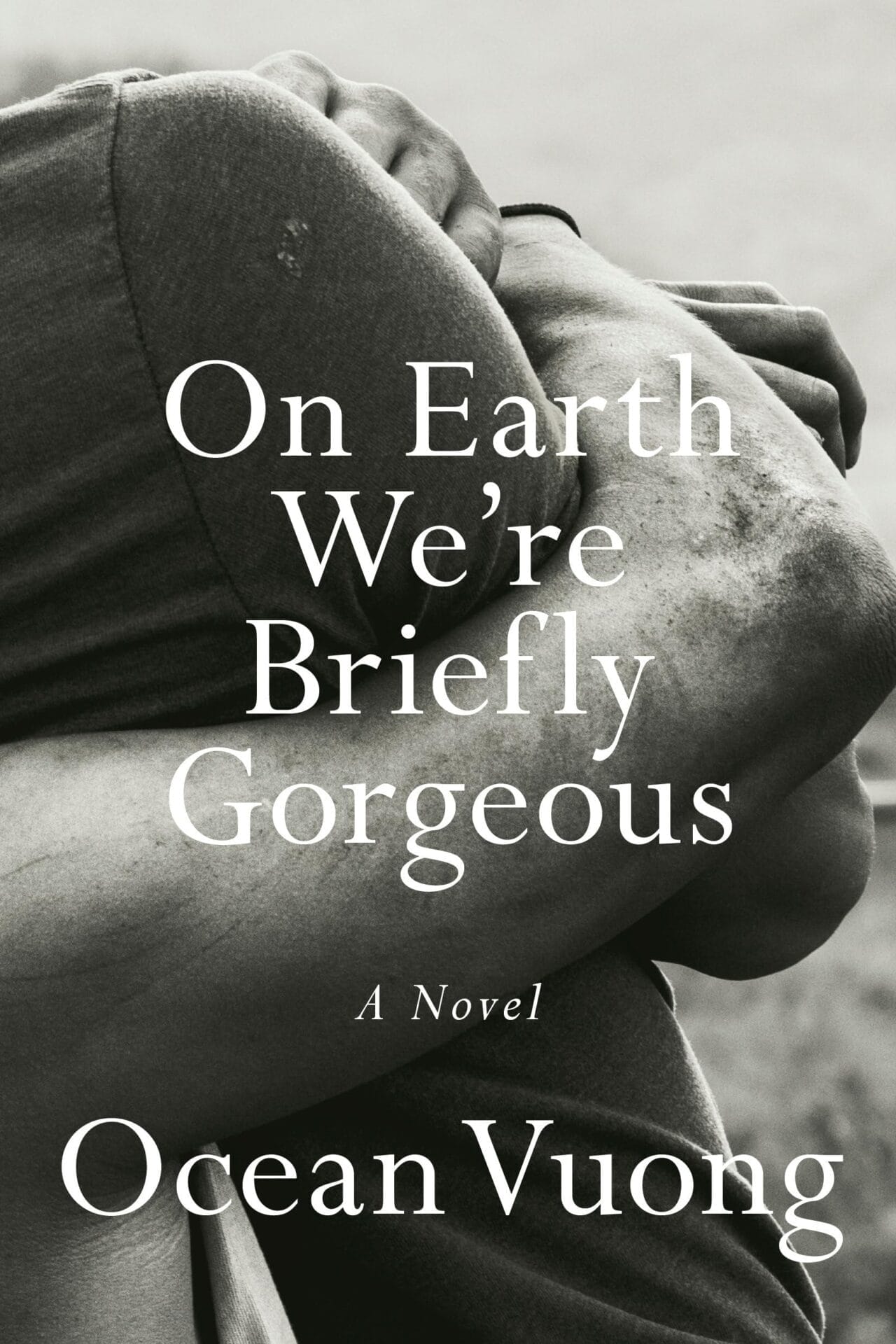

On Earth We're Briefly Gorgeous
By Ocean Vuong
On Earth We’re Briefly Gorgeous is a letter from a son to a mother who cannot read. Written when the speaker, Little Dog, is in his late twenties, the letter unearths a family’s history that began before he was born — a history whose epicenter is rooted in Vietnam — and serves as a doorway into parts of his life his mother has never known, all of it leading to an unforgettable revelation. At once a witness to the fraught yet undeniable love between a single mother and her son, it is also a brutally honest exploration of race, class, and masculinity. Asking questions central to our American moment, immersed as we are in addiction, violence, and trauma, but undergirded by compassion and tenderness, On Earth We’re Briefly Gorgeous is as much about the power of telling one’s own story as it is about the obliterating silence of not being heard.
With stunning urgency and grace, Ocean Vuong writes of people caught between disparate worlds, and asks how we heal and rescue one another without forsaking who we are. The question of how to survive, and how to make of it a kind of joy, powers the most important debut novel of many years.
My thoughts:
As someone drawn to stories about queer men trying to find their place in the world, this one hit close. Maybe because my own journey was long, complicated, and often messy. Maybe because I see myself in stories where identity isn’t just about love or sexuality, but survival. This book gets that. This was one of those books that didn’t just tell a story, it echoed something inside of me.
The story is written as a letter from a young Vietnamese-American man—nicknamed Little Dog—to his illiterate mother. It’s a letter she will likely never read, and in knowing that, it allows the MC to lay it all out there–both the good and the bad. It’s not just a way to speak to her. It’s a way to speak for himself.
Little Dog’s life is layered with pain and tenderness. He’s the child of immigrants who carry deep trauma from surviving the Vietnam War. His mother and grandmother both struggle with PTSD and mental health issues, and while he grows up helping them, he’s also carrying the weight of navigating racism, poverty, and the ache of growing up gay in a world that doesn’t make space for softness.
A relationship with a boy he meets while working on a tobacco farm becomes the center of Little Dog’s sexual awakening—and also his heartbreak. Their connection is intimate and visceral, but it’s not a love story in the traditional sense. It’s something harder. Something real. It’s beautiful, and it’s brutal, and it made my heart hurt. Anyone who has ever loved someone who couldn’t (or wouldn’t) full love them back will see a piece of themselves here.
What resonated most for me was the intersection of queerness and cultural heritage. It’s one thing to feel different because of who you love. It’s another to feel like you don’t belong in any world—too Vietnamese to be American, too American to be Vietnamese. Too gay to be straight, but living in a world where people only accept you if you’re straight. Vuong captures that in a way that doesn’t feel performative. It just is.
One thing worth calling out is the narrative style. It’s fragmented and at times poetic (and sometimes a little scattered). It took me a bit to find the rhythm, and I actually wonder if I might have liked it better had I listened to the audiobook. This feels like a story that wants to be heard as much as read.
This isn’t a book that wraps anything up neatly. There’s no triumphant arc or sweeping resolution. But there is beauty, and honesty, and a quiet, pulsing kind of hope. If you’re in the mood for something poetic, reflective, and emotionally intense this pride month, then this book is absolutely worth your time.
Genre(s):
Other Bookish Tags:


