





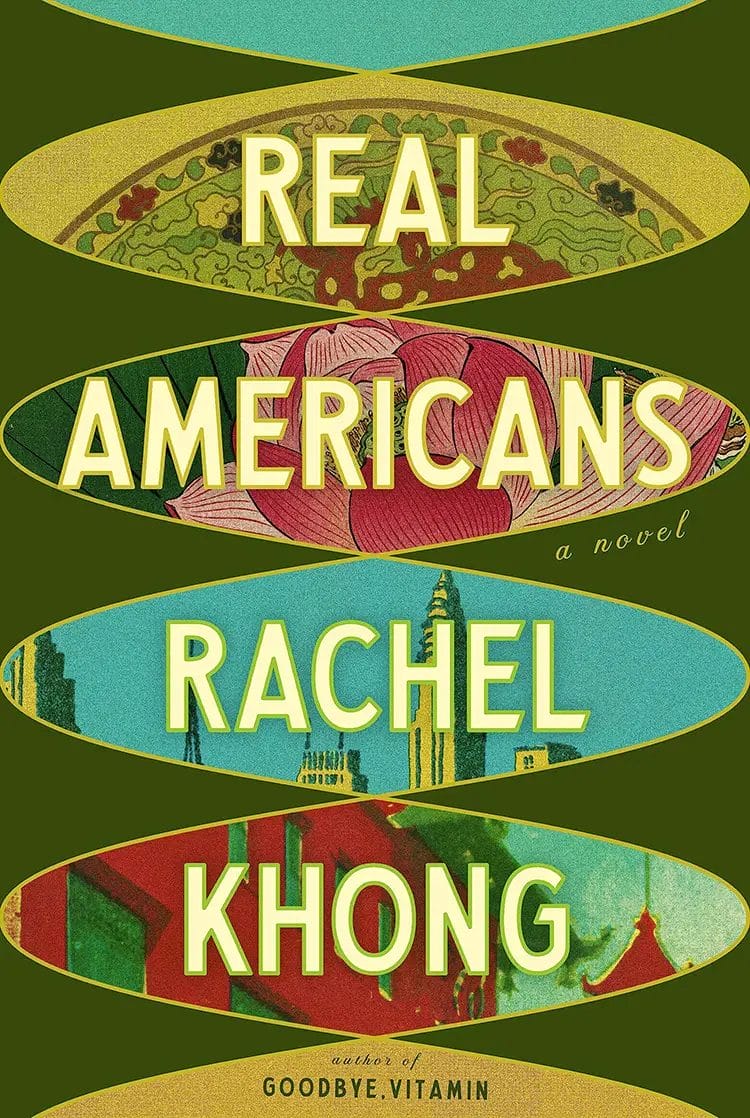

Real Americans
By Rachel Khong
Real Americans begins on the precipice of Y2K in New York City, when twenty-two-year-old Lily Chen, an unpaid intern at a slick media company, meets Matthew. Matthew is everything Lily is not: easygoing and effortlessly attractive, a native East Coaster and, most notably, heir to a vast pharmaceutical empire. Lily couldn’t be more different: flat-broke, raised in Tampa, the only child of scientists who fled Mao’s Cultural Revolution. Despite all this, Lily and Matthew fall in love.
In 2021, fifteen-year-old Nick Chen has never felt like he belonged on the isolated Washington island where he lives with his single mother, Lily. He can’t shake the sense she’s hiding something. When Nick sets out to find his biological father, the journey threatens to raise more questions than answers.
In immersive, moving prose, Rachel Khong weaves a profound tale of class and striving, race and visibility, and family and inheritance—a story of trust, forgiveness, and finally coming home.
Exuberant and explosive, Real Americans is a social novel par excellence that asks: Are we destined, or made, and if so, who gets to do the making? Can our genetic past be overcome?
My thoughts:
This is one of those books that quietly sneaks up on you. It’s layered, thoughtful, and full of emotional depth. It’s also the kind of story that makes you stop and think about how much of who we are comes from the people who raise us and the choices they made. Choices that are indirectly handed down to us.
The novel spans decades and three points of view: May, the mother; Lily, her daughter; and Nico (Nick), Lily’s son. Each section unfolds in first person, which gives the book an intimacy that’s sometimes missing in stories like this. You’re not being told about these people, you’re inside their heads, feeling their heartbreak, confusion, and quiet hope. It makes a big difference and it’s how I prefer literary fiction.
The story begins in 1999 with Lily, a young Chinese American woman trying to make her way in New York City as an unpaid intern. She meets Matthew, the privileged heir to a pharmaceutical empire, and they fall in love despite the gap in class and culture. What starts as a seemingly ordinary love story turns into something much more complicated.
Then we jump forward to 2021, where we meet Lily’s teenage son, Nick. He’s living with his mother on a remote Washington island, feeling restless and disconnected. His section brings a different kind of energy, especially once he starts searching for the truth about his father. His discoveries pull together the threads that have been quietly building beneath the surface, and this middle section might be my favorite. It’s where the emotional weight really settles in.
Finally, we step back in time again with May, Lily’s mother, and get the full picture. Her story adds a sense of scope and clarity that recontextualizes everything that came before. The decisions she made and the sacrifices all tie into Lily’s choices. Choices that affected Nick. In the end, it all becomes about inheritance. Not just genetic or financial inheritance, but emotional inheritance passed down through families.
Khong handles this shifting timeline structure extremely well. Each perspective feels distinct yet connected, and the pacing never drags. The prose is clean and controlled, with moments that make you stop and reflect. She doesn’t overwrite the emotion; she just lets it breathe.
The book touches on a lot, especially around race, class, science, destiny, and it asks big questions without ever feeling preachy. There’s a thread of speculative science here, too, woven lightly through the narrative in a way that feels almost eerie. It never dominates the story, but it deepens the themes about identity and control. The “nature versus nurture” idea is explored not just through relationships but through literal experimentation, which adds a fascinating edge.
What I loved most, though, is how grounded it all feels. The relationships especially feel messy and real. There’s love, resentment, misunderstanding, and forgiveness all tangled together. No one in this story is purely right or wrong. They’re just human, doing their best to make sense of impossible choices. It’s sweeping in scope but emotionally precise. Even when it jumps between decades or perspectives, the emotional throughline never gets lost. I finished the book feeling satisfied but also reflective. Like I needed a little quiet to process everything. It’s that kind of read.
If you like multigenerational stories that mix love, legacy, and cultural identity with just a touch of science and mystery, this one delivers. It’s heartfelt without being sentimental, and full of characters who stay with you long after you’ve closed the book.
Genre(s):
Other Bookish Tags:


