





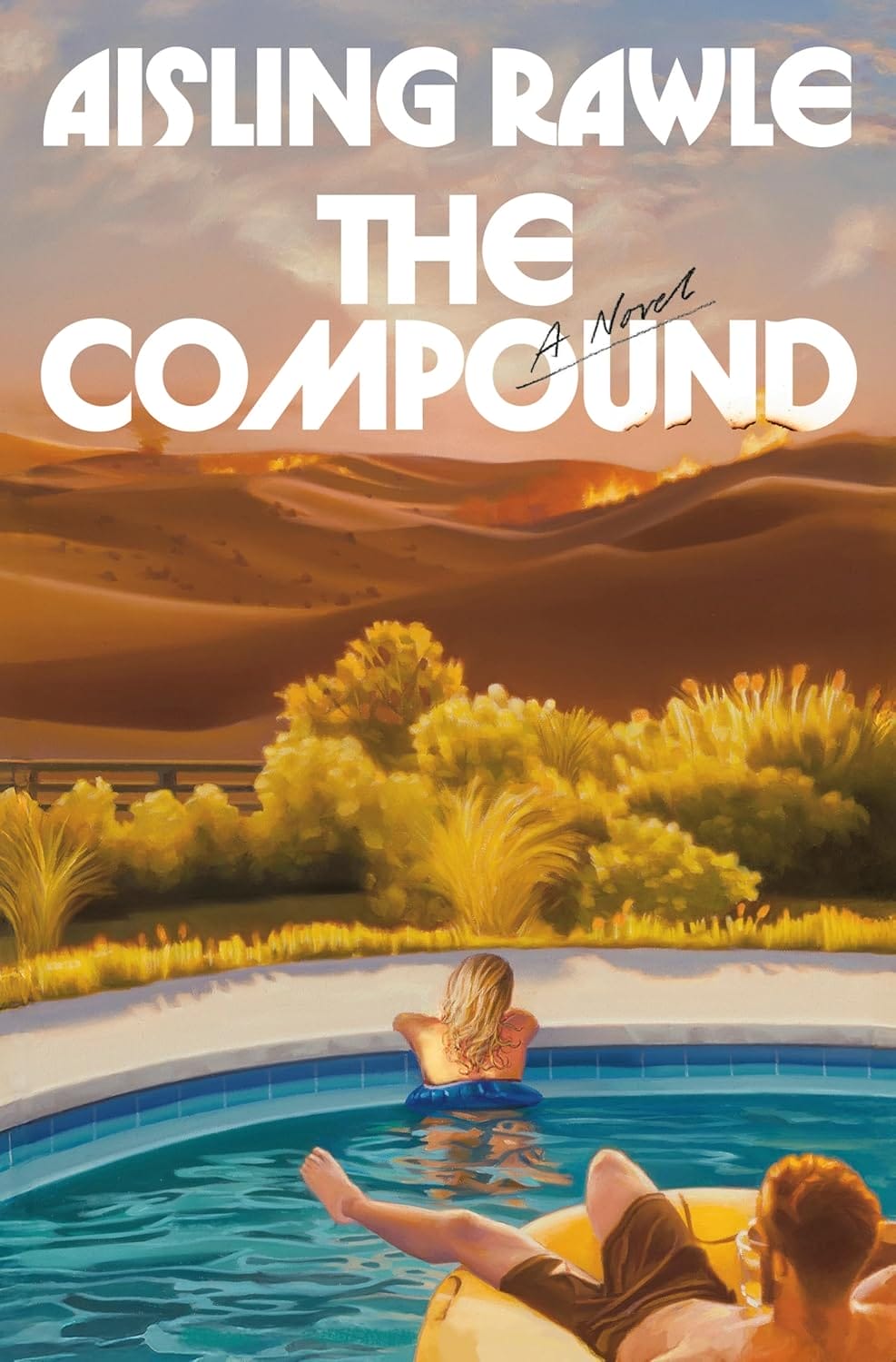

The Compound
Nothing to lose. Everything to gain. Winner takes all.
Lily—a bored, beautiful twentysomething—wakes up on a remote desert compound alongside nineteen other contestants on a popular reality TV show. To win, she must outlast her housemates while competing in challenges for luxury rewards, such as champagne and lipstick, and communal necessities to outfit their new home, like food, appliances, and a front door.
The cameras are catching all her angles, good and bad, but Lily has no desire to leave: Why would she, when the world outside is falling apart? As the competition intensifies, intimacy between the players deepens, and it becomes increasingly difficult to distinguish between desire and desperation. When the producers raise the stakes, forcing contestants into upsetting, even dangerous situations, the line between playing the game and surviving it begins to blur. If Lily makes it to the end, she’ll receive prizes beyond her wildest dreams—but what will she have to do to win?
Addictive and prescient, The Compound is an explosive debut from a major new voice in fiction and will linger in your mind long after the game ends.
My thoughts:
I have to admit. I’m not immune to the appeal of reality television. I’ve spent many hours watching the drama unfold on certain shows, and I don’t apologize for it. But I’m also not a total reality TV junkie. I love the competition shows; Drag Race, Project Runway, The Traitors. I think the only non-competition shows I like are the Housewives franchise. Then there are other series, like Love Island, Summer House, and Southern Charm, that I just can’t stomach. The cast members often come across as painfully immature and aggressively unrelatable. So when I picked up The Compound, I knew I was venturing into a story centered around those types of personalities and I was afraid I would hate all the characters. And for the most part, I did, but it still worked.
This is a book that lives in the uncomfortable space between cringe and commentary. It mimics the most superficial aspects of reality TV—people filmed 24/7, meaningless hookups, superficial alliances—but underneath the glossy façade is a much darker, much more intriguing world, and that’s what kept me reading.
The setup is pretty straightforward at first. Lily, the protagonist, wakes up at a remote desert compound alongside nineteen other contestants, each vying to win a reality show. The prize? Survival, luxury, clout. Some tasks reward the group, others benefit individuals. It’s competitive and manipulative and exactly what you’d expect from a dystopian twist on Big Brother or The Real World. But here’s where things start to veer from the familiar: the compound is actually a sanctuary. Outside its artificial bubble, the real world is crumbling. Climate collapse, societal breakdown, mass death. People are dying out there. In here? There’s filtered air and functioning showers and lavish gifts from sponsors.
Suddenly, the bizarre premise starts to feel less like satire and more like a warning and Rawle leans into that juxtaposition hard. She gives us a house full of gorgeous, shallow influencers and clout-chasers, then slowly peels back the layer of performance to reveal something feral underneath. It’s messy. It’s uncomfortable. It’s also oddly gripping.
Lily is a strange character. I wouldn’t call her likable, and I don’t think we’re supposed to. She’s disaffected, detached, sometimes sharp but often passive. There were moments when I wanted to shake her. Other moments I understood why she’d checked out emotionally. She’s a product of her environment, and her environment is built entirely on performance. I didn’t relate to her, but I was interested in watching her unravel.
That’s true for most of the cast. There are some personalities that feel like people you’ve seen on TV before—hot, bored, narcissistic and a little sociopathic. I didn’t really connect with any of them, but I don’t think connection is the point here. These characters aren’t meant to be your new best friends. They’re here to make you squirm a little, to push you to question what you’d tolerate for comfort and in some cases, survival.
The writing is clean, but not showy. It’s not overly descriptive or poetic, but it does what it needs to do, and the pacing works well. There’s a slow-burn sense of dread that builds as the challenges get stranger and the isolation sets in. At first, it’s all spray tans and champagne. Then come the morally murky tasks. Then it starts getting dangerous. You begin to question how far the producers will go. How far the contestants will go. And whether any of them can walk away from this thing with their humanity intact.
The book does well what it set out to do. It’s a smart critique of influencer culture, voyeurism, and our obsession with artificial connection. It also holds up a mirror to how easily people can be manipulated when the outside world becomes too terrifying to face. Why confront the chaos of reality when you can compete for filtered air and filtered selfies?
So did I love this book? Not exactly. But I respected what it was doing. It held my attention, gave me plenty to think about, and nailed its tone. It’s not a perfect read. It’s not even a warm one. But it’s provocative and effective and full of eerie, slow-creep discomfort. If you like stories that blur the line between satire and horror, fiction and future, this is one worth checking out. Just don’t expect to root for anyone.
Book Club/Book Box:


