





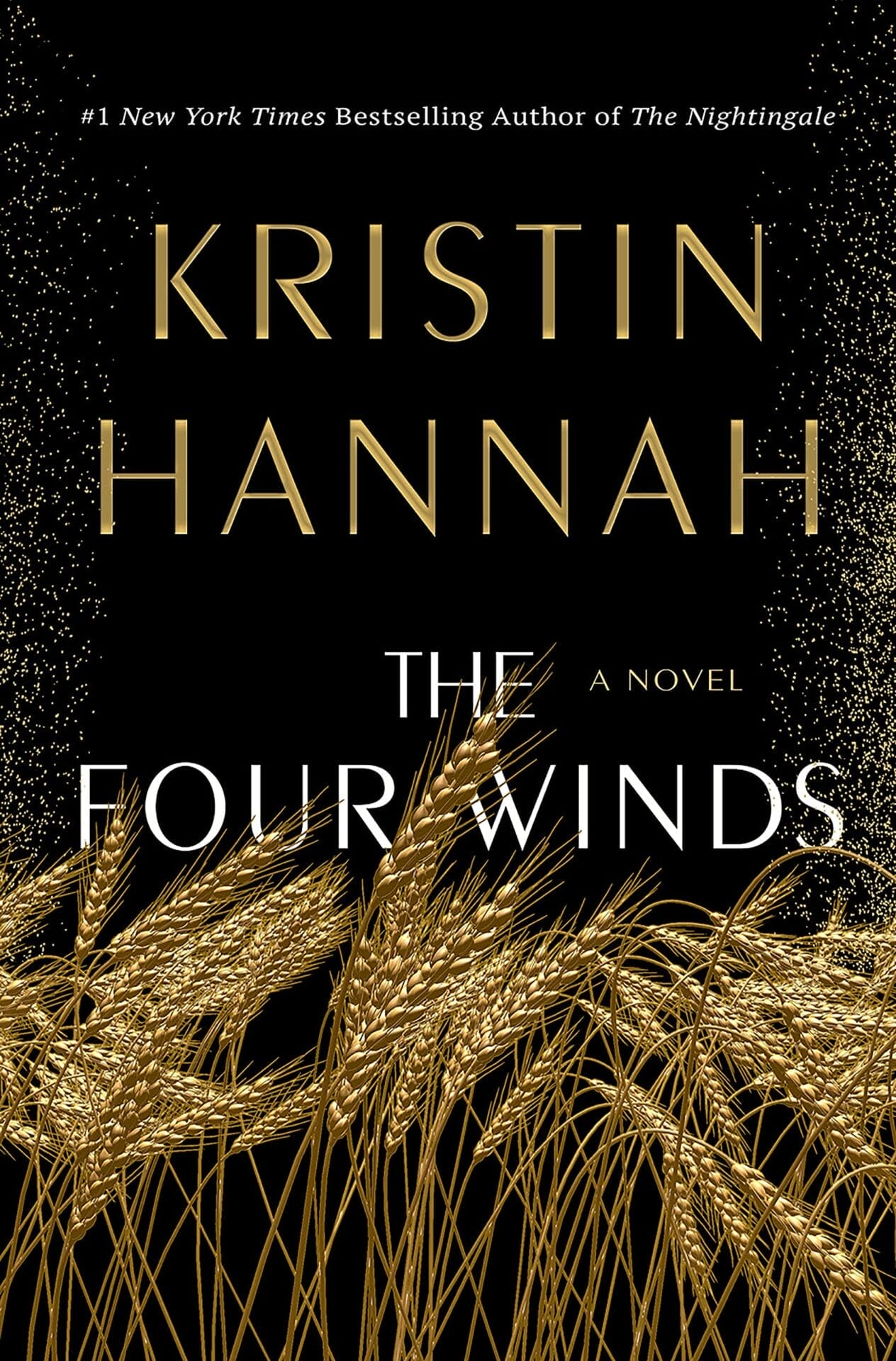

The Four Winds
From the number-one bestselling author of The Nightingale and The Great Alone comes a powerful American epic about love and heroism and hope, set during the Great Depression: a time when the country was in crisis, when millions were out of work and even the land seemed to have turned against them.
My land tells its story if you listen. The story of our family.
Texas, 1921. A time of abundance. The Great War is over, the bounty of the land is plentiful, and America is on the brink of a new and optimistic era. But for Elsa Wolcott, deemed too old to marry in a time when marriage was a woman’s only option, the future seems bleak. Until the night she meets Rafe Martinelli and decides to change the direction of her life. With her reputation in ruin, there is only one respectable choice: marriage to a man she barely knows.
By 1934, the world has changed: Millions are out of work, and drought has devastated the Great Plains. Farmers are fighting to keep their land and their livelihoods as crops fail and water dries up and the earth cracks open. Dust storms roll relentlessly across the plains. Everything on the Martinelli farm is dying, including Elsa’s tenuous marriage; each day is a desperate battle against nature and a fight to keep her children alive.
In this uncertain and perilous time, Elsa―like so many of her neighbors―must make an agonizing choice: Fight for the land she loves or leave it behind and go west, to California, in search of a better life for her family.
The Four Winds is a rich, sweeping novel that stunningly brings to life the Great Depression and the people who lived through it―the harsh realities that divided a nation and the enduring battle between the haves and the have-nots. A testament to hope, resilience, and the strength of the human spirit to survive adversity, The Four Winds is an indelible portrait of America and the American Dream, as seen through the eyes of one indomitable woman whose courage and sacrifice will come to define a generation.
My thoughts:
This was my third Kristin Hannah book, and I’m sorry to say it wasn’t my favorite. I didn’t hate it, not at all. It’s a beautifully researched, deeply felt portrait of a painful period in American history, and there’s no denying Hannah’s ability to write emotionally grounded characters. But when I stack it against The Nightingale or The Women, which both fully pulled me in, this one felt a little distant. I wanted to be devastated. I expected to be breathless. That just didn’t happen here.
The story centers on Elsa Wolcott, a woman raised in a wealthy but cold household where she’s constantly reminded that she’s plain, unremarkable, and destined for a quiet life of nothing. At twenty-five, she’s considered an old maid. When she’s forced to marry Rafe Martinelli after an accidental pregnancy, her life is set on a drastically different course. What follows is a hard, dry, painful life on the Texas plains during the Great Depression and the search for a better life in California. Over the next decade, Elsa fights tooth and nail to care for her children while everything around her withers, cracks, and disappears.
Kristin Hannah does what she always does well: she takes historical facts and breathes life into them. You feel the dust, the despair, the exhaustion of trying to coax a dying land back to life. The environmental degradation and the economic collapse are both present, but neither overwhelm the human story at the center. That balance is not easy to pull off, and she does it with clarity and restraint. You don’t need to be told how bad it is. You feel it.
As far as characters go, I liked Elsa. A lot. She’s written with care and grit. Watching her grow from someone silenced by shame and familial neglect into a mother who will risk everything to protect her children was powerful. I appreciated how much of her identity was forged in the slow burn of suffering. She’s not a glamorous character, or even a particularly hopeful one at times, but she’s believable. Her courage isn’t loud. It’s quiet, stubborn, and exhausted. It’s the kind of courage that shows up even when no one’s watching.
I also liked the Martinelli family. They were layered, proud, and kind in their own hard-edged way. That relationship, between Elsa and the family she marries into, was one of the highlights for me. The bond she forms with her mother-in-law through shared labor and quiet loyalty felt real. It anchored the emotional weight of the first half of the book.
And yet, despite all of this, I found myself checking out during chunks of the book. There were moments I felt like I was supposed to be devastated, but instead, I was just … reading. I kept waiting for the emotional snap that never came. I think part of the issue for me was the pacing. The book spends a long time building Elsa’s struggle in Texas, which is fine, but once the migration to California begins, things felt rushed. I wanted more time with the challenges she faced on the road, more time with the injustices and exhaustion of trying to build a new life in a place that barely wanted her. The final third of the book, where the action ramps up and the stakes become higher, didn’t have the build-up it needed. By the time we reach the ending, it felt abrupt, and while devastating in a way, for me, it felt emotionally undercooked.
Still, I’ll read more Kristin Hannah. Absolutely. She knows how to write women who endure. She’s not afraid of the darkness, and she doesn’t flinch away from the brutality of the past. I think this one just didn’t hit me in the way I wanted it to. I wanted to be broken by this book. Instead, I was mostly just impressed. Sometimes, that’s enough. Other times, it leaves you wishing you had felt more.
Genre(s):
Other Bookish Tags:


