





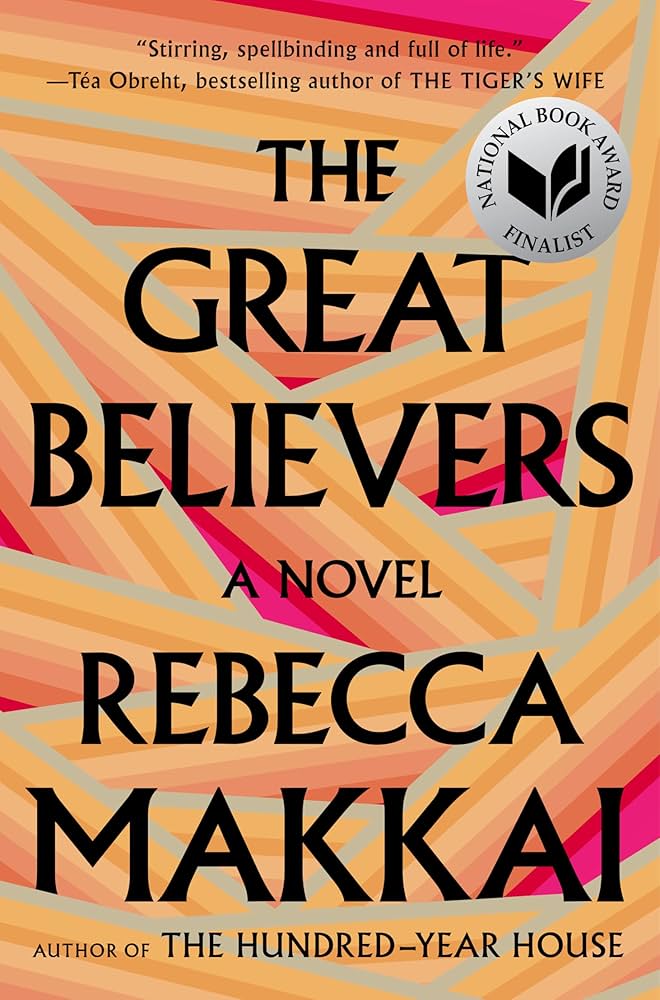

The Great Believers
A dazzling new novel of friendship and redemption in the face of tragedy and loss set in 1980s Chicago and contemporary Paris
In 1985, Yale Tishman, the development director for an art gallery in Chicago, is about to pull off an amazing coup, bringing in an extraordinary collection of 1920s paintings as a gift to the gallery. Yet as his career begins to flourish, the carnage of the AIDS epidemic grows around him. One by one, his friends are dying and after his friend Nico’s funeral, the virus circles closer and closer to Yale himself. Soon the only person he has left is Fiona, Nico’s little sister.
Thirty years later, Fiona is in Paris tracking down her estranged daughter who disappeared into a cult. While staying with an old friend, a famous photographer who documented the Chicago crisis, she finds herself finally grappling with the devastating ways AIDS affected her life and her relationship with her daughter. The two intertwining stories take us through the heartbreak of the eighties and the chaos of the modern world, as both Yale and Fiona struggle to find goodness in the midst of disaster.
The Great Believers has become a critically acclaimed, indelible piece of literature; it was selected as one of New York Times Best 10 Books of the Year, a Washington Post Notable Book, a Buzzfeed Book of the Year, a Skimm Reads pick, and a pick for the New York Public Library’s Best Books of the year.
My thoughts:
This is one of the most powerful books I’ve read in a very long time. I knew from the synopsis that it would be emotional, but nothing prepared me for how deeply it would hit. I went in expecting heartbreak. What I didn’t expect was how personal it would feel or how quickly I’d fall in love with this cast of characters.
The novel moves between two timelines. In 1985 Chicago, Yale Tishman is trying to secure a historic art collection for the gallery where he works. His career is finally gaining momentum, but the world around him is falling apart. The AIDS crisis is ripping through his community, and one by one, his friends are dying and as much as he hates to admit it, it’s likely only a matter of time before it takes him, too.
Then we jump to 2015 Paris, where Fiona (who was also one of Yale’s friends through her brother Nico who died of AIDS) is searching for her estranged daughter. She’s staying with an old friend who documented the epidemic decades earlier, and being back in Europe forces her to confront the long shadow the crisis cast over her own life.
Both timelines are important, but the 80s storyline is the heart of the novel. That’s where the pulse is, and honestly, it’s where I stayed, emotionally. Makkai brings the AIDS epidemic to life with a level of detail and empathy that’s gutting. She doesn’t sensationalize it. She doesn’t soften it. Instead, she gives you the reality: the fear, the stigma, the funerals, the exhaustion, the anger, and the fierce love that existed inside those communities at a time when almost no one cared.
I felt every loss. I was too young to experience all of this first-hand, but I was in college at the tail end, so I got a taste of it. I lost a friend to AIDS in the mid-90s, and reading this reopened wounds I didn’t realize were still so raw. Makkai nails the terror, the helplessness, the rage at a world that shrugged while people died. No one cared because it was happening to gay men.
What impressed me most is how deeply human the chapters set in the ’80s feel. These men aren’t statistics or symbols—they’re vibrant, complex, flawed, funny, hopeful people. You feel like you’re part of their friend group. I laughed with them. I hurt with them. And every time one of them got sick, my stomach dropped.
The 2015 timeline with Fiona adds an interesting contrast, but I’ll be honest: I didn’t feel as connected to this timeline as I did the earlier one. Whenever the narrative shifted to the future, I found myself wanting to go back to the 80s chapters because that’s where my heart was anchored. Fiona’s storyline has emotional weight, but Yale’s felt urgent in a way that’s hard to shake.
Still, the way Makkai ties these two threads together is impressive. By the end, the timelines reflect each other in a way that is very poignant. The book becomes not just a story about a devastating epidemic, but a story about memory, legacy, forgiveness, and the families we form. Especially when our own families refuse to make room for us.
This book is a beautifully written reminder of how many lives were lost, how many voices were silenced, and how much resilience lived in communities that were ignored at their darkest moment. It’s vital and emotional reading. And it’s the kind of book that stays with you in a very real way.
Everyone should read this, but I think it will especially resonate with gay men and anyone touched by the epidemic. It’s heartbreaking but also full of tenderness. And it’s incredibly important.


