





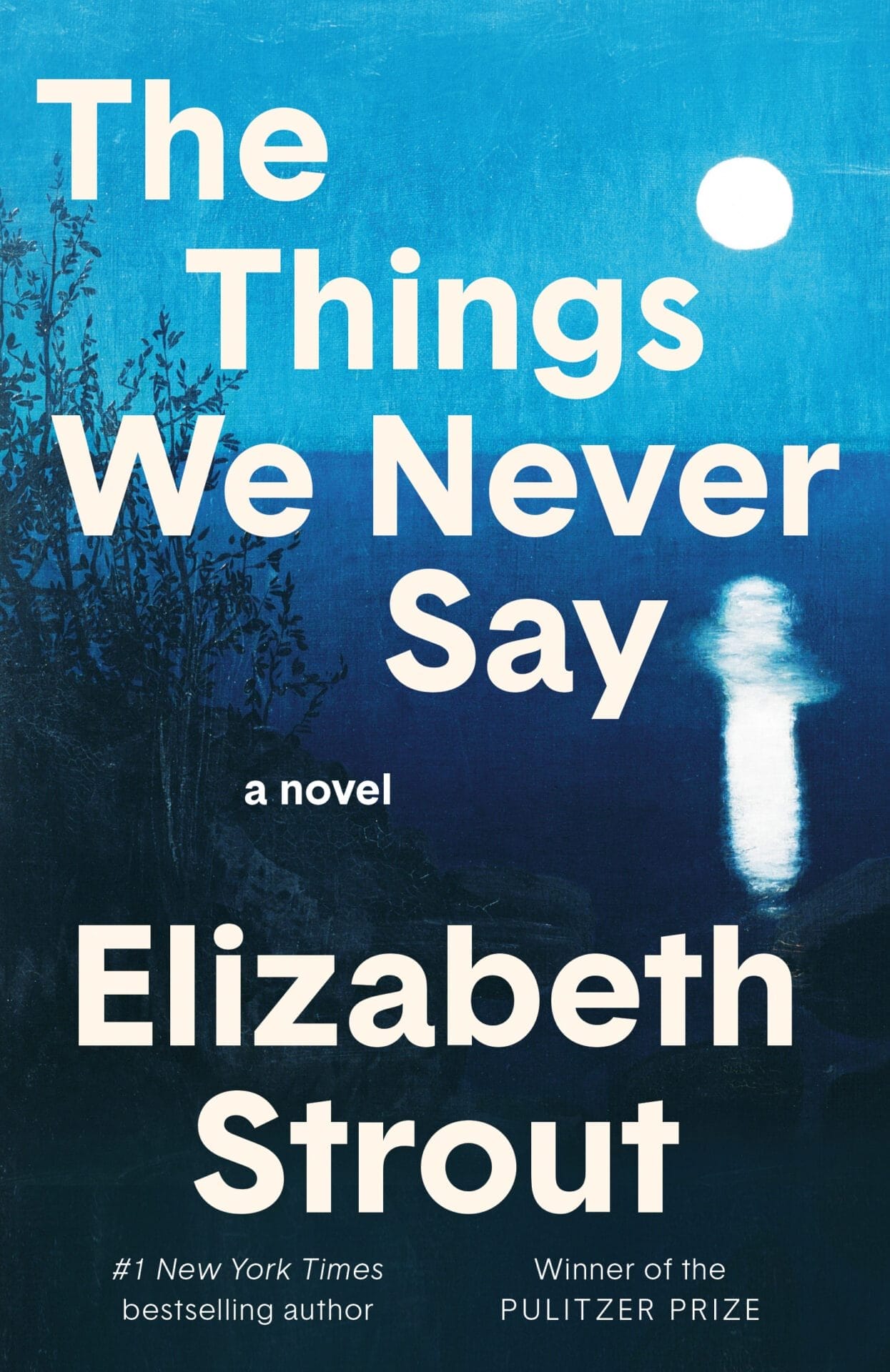

The Things We Never Say
Pulitzer Prize–winning, #1 New York Times bestselling author Elizabeth Strout’s new novel tells the story of a chance incident that sparks a powerful realization in a beloved teacher’s life—a poignant meditation on loneliness, friendship, parenthood, and the importance of truth in a capsizing world.
Artie Dam is living a double life. He spends his days teaching history to eleventh graders, expanding their young minds, correcting their casual cruelties, and lending a kind word to those who need it most. He goes to holiday parties with his wife of three decades, makes small talk with neighbors, and, on weekends, takes his sailboat out on the beautiful Massachusetts Bay. He is, by all appearances, present and alive. But inside, Artie is plagued by feelings of isolation. He looks out at a world gone mad—at himself and the people around him—and turns a question over and over in his mind: How is it that we know so little about one another, even those closest to us?
And then, one day, Artie learns that life has been keeping a secret from him, one that threatens to upend his entire world. Once he learns it, he is forced to chart a new course, to reconsider the relationships he holds most dear—and to make peace with the mysteries at the heart of our existence.
Elizabeth Strout, as we have come to expect, delivers a moving exploration of the human condition—one that brims with compassion for each and every one of her indelible characters. With exquisite prose and profound insight, The Things We Never Say takes one man’s fears and loneliness and makes them universal. And in the same breath, captures the abiding love that sustains and holds us all.
My thoughts:
I’ll be honest. When I finished this book, my first reaction was “meh, I don’t get the hype.” I was annoyed with a few things, set it down, moved on. But I couldn’t stop thinking about it and the longer it sat with me, the more I actually liked it because I think I grew to understand it. Funny how that happens.
Artie Dam is a high school history teacher in his sixties. He’s been married a long time. He has a sailboat. He shows up at parties and chats with neighbors he’s known for years. From the outside, he looks like a man who has it pretty well figured out. From the inside, he’s lonely and he doesn’t think he wants to live anymore. He sees the world spiraling and can’t quite figure out how to move through it. He’s also learned a secret about his wife that he can’t bring himself to confront her about which makes him wonder how you can really ever know someone.
I wasn’t as emotionally wrecked by this book as I expected to be. I’d heard it was a tearjerker, and yes, I choked up a few times, but I didn’t have that wrung-out feeling some Strout readers talked about. What got me instead was Artie himself. He grows on you. Slowly, at first, and then a lot. By the end I was mostly in his corner. He’s thoughtful, kind, patient with his students and the guy you’d want as your neighbor.
But here’s where my frustration came in. Artie is a great human, but I wanted him to be extraordinary. I wanted him to speak up even more. I wanted him to take what he was feeling about the state of the world and actually do something with it instead of letting it eat at him. He internalizes so much and while he speaks up in some situations, there were others where he should have done more.
I think that bugged me because it taps into something that frustrates me in real life. A lot of us white people have the option of staying quiet, of letting things roll off our backs because confrontation is hard and silence is easy. We can sit through family dinners where someone says something awful and just keep eating. We can watch entire communities get demonized and write a letter, shake our heads, add our names to a petition, and call that engagement. We can sit at home and doom scroll and ring our hands and worry about the state of the world, and say how awful everything is, but we don’t have to do anything and instead let minorities manage it instead. We can stay out of it and face almost no consequences for doing so. That privilege is real, and it has costs other people pay for us.
So I was reading Artie through that frustration. I wanted him to be the version of himself who finally spoke up.
But the more I sat with the book, the more I wondered if that was the point. The title, after all, is “The Things We Never Say”. So, maybe Strout isn’t writing Artie as a hero. Maybe she’s writing him as a quiet warning. Maybe the message is that being a great person isn’t enough. Even great people could be better. Staying quiet has a cost. Speaking up shouldn’t be something we’re ashamed of or scared of. The more I sat with that read, the more I felt like the book had actually done something to me, even when I thought it hadn’t.
This one is just over two hundred pages, and it brought up a whole lot of thoughts and a whole lot of feelings in that short stretch. If you like literary fiction that doesn’t tell you what to think and isn’t afraid to leave you sitting with a feeling you can’t quite name, this one is worth your time. Don’t expect easy answers, but do dig deep and do expect to be thinking about Artie for days.


