





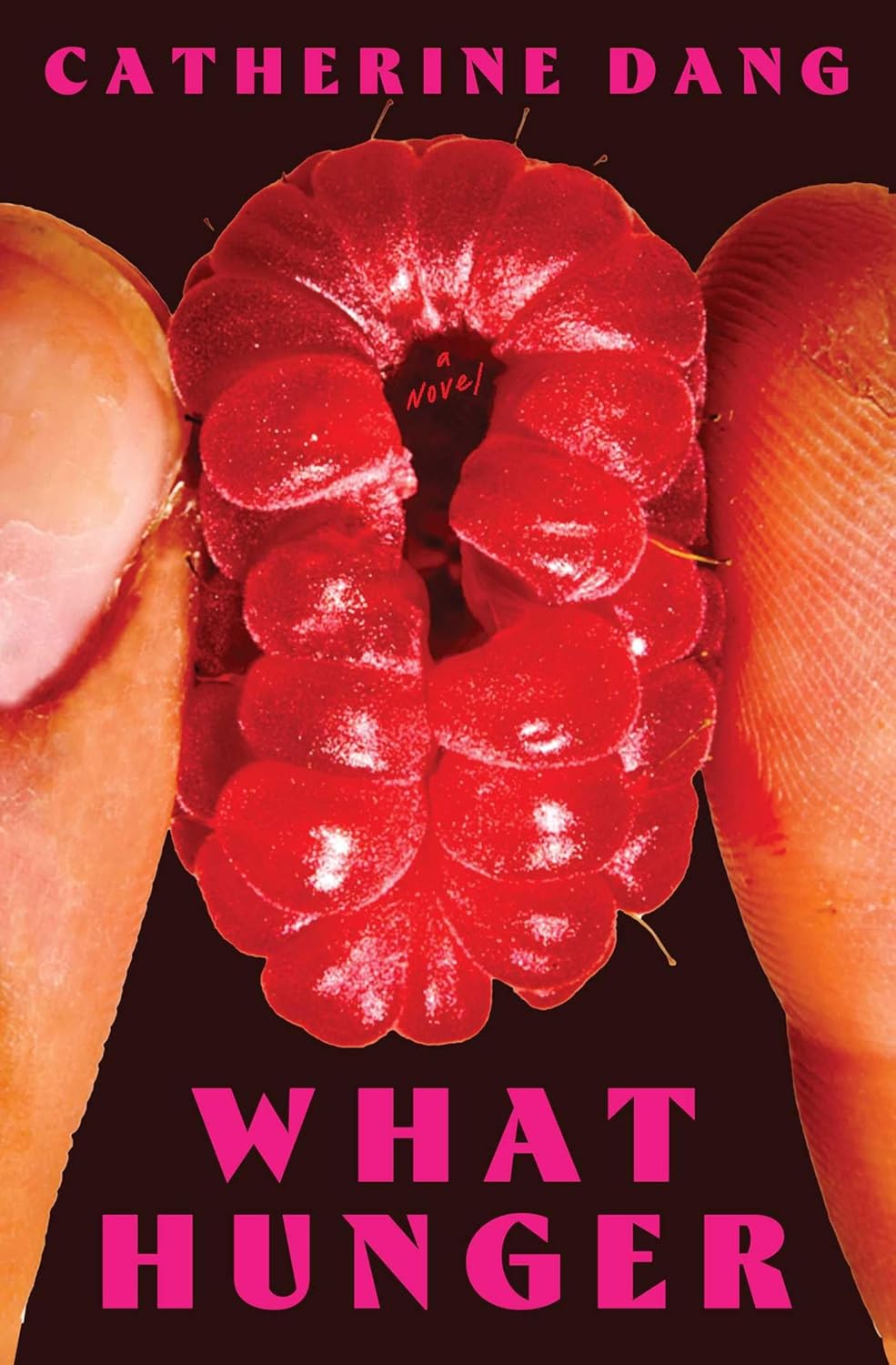

What Hunger
A haunting coming-of-age tale following the daughter of Vietnamese immigrants, Ronny Nyugen, as she grapples with the weight of generational trauma while navigating the violent power of teenage girlhood, for fans of Jennifer’s Body and Little Fires Everywhere.
It’s the summer before high school, and Ronny Nguyen finds herself too young for work, too old for cartoons. Her days are spent in a small backyard, dozing off to trashy magazines on a plastic lawn chair. In stark contrast stands her brother Tommy, the pride and joy of their immigrant parents: a popular honor student destined to be the first in the family to attend college. The thought of Tommy leaving for college fills Ronny with dread, as she contemplates the quiet house she will be left alone in with her parents, Me and Ba.
Their parents rarely speak of their past in Vietnam, except through the lens of food. The family’s meals are a tapestry of cultural memory: thick spring rolls with slim and salty nem chua, and steaming bowls of pho tái with thin, delicate slices of blood-red beef. In the aftermath of the war, Me and Ba taught Ronny and Tommy that meat was a dangerous luxury, a symbol of survival that should never be taken for granted.
But when tragedy strikes, Ronny’s world is upended. Her sense of self and her understanding of her family are shattered. A few nights later, at her first high school party, a boy crosses the line, and Ronny is overtaken by a force larger than herself. This newfound power comes with an insatiable hunger for raw meat, a craving that is both a saving grace and a potential destroyer.
What Hunger is a visceral, emotional journey through the bursts and pitfalls of female rage. Ronny’s Vietnamese lineage and her mother’s emotional memory play a crucial role in this tender ode to generational trauma and mother-daughter bonding.
My thoughts:
I received an advance galley of this book courtesy of the publisher. All thoughts are my own.
I need to start by saying I am not a fan of cannibalism in any way shape or form. Not in movies. Not in books. Not in any late-night “true story” podcast. It will always gross me out. And yet, here we are again, another book where someone thinks the most satisfying revenge is eating the one who wronged you.
Here’s the thing—I am 100% behind female rage in fiction. Give me a woman wronged who rises up and gets even, and I will be cheering from page one. I love a good revenge arc. But I can’t help wondering… why do you have to eat them? Personally, if someone hurt me, the last thing I’d want is for any part of their nasty-ass self to end up inside my body. I’m not looking to Mrs. Lovett anybody. Call me old-fashioned, but I’d rather grab some chicken nuggets and a milkshake after the deed is done and revel in the thought that they will never hurt me or anyone else again.
Now that’s off my chest, I can say that the writing and the characters in this book are great. The story’s lead, Ronny Nguyen, feels painfully real. She’s caught in that in-between stage before high school, too old for childish games and too young to carve out a real place in the adult world. She’s living in the shadow of her golden-boy brother, Tommy, who’s bound for college and the kind of future their immigrant parents dreamed of until his life is cut short. Their household is full of quiet tension and unspoken history, with food serving as both comfort and a cultural anchor.
When tragedy strikes and Ronny is assaulted at her first high school party, the book shifts into darker territory. Her grief and fury are so raw you can feel them in your chest. And then comes the sudden, visceral hunger. It’s unsettling, it’s symbolic, and it’s absolutely not for the squeamish (and obviously, not for me). For Ronny, this craving becomes both her weapon and her curse, tying her to a cycle of survival and vengeance that’s hard to look away from… even if, like me, you really want to.
The strongest part of this book is the layered exploration of generational trauma, identity, and mother-daughter bonds. Dang doesn’t shy away from the ugly truths of how grief and rage can transform someone. The family’s history in Vietnam, their relationship to food, and their shared understanding of what it means to survive are deeply woven into every scene. It’s more than just a revenge story, and that I appreciated.
So, where do I land? I liked the book. I really did. I cared about Ronny, I understood her pain, and I even understood her need to fight back. But the cannibalism was a dealbreaker for me. No matter how well it was written, no matter how metaphorical the hunger was meant to be, I couldn’t get past the act itself. That’s my hang-up, though and not the book’s failing. If you can stomach it (pun reluctantly intended), there’s a lot of powerful storytelling here. If you’re drawn to stories of female rage, generational trauma, and morally gray choices, this one delivers on all fronts. Just… maybe don’t read it over lunch.
Book Club/Book Box:


