






My thoughts:
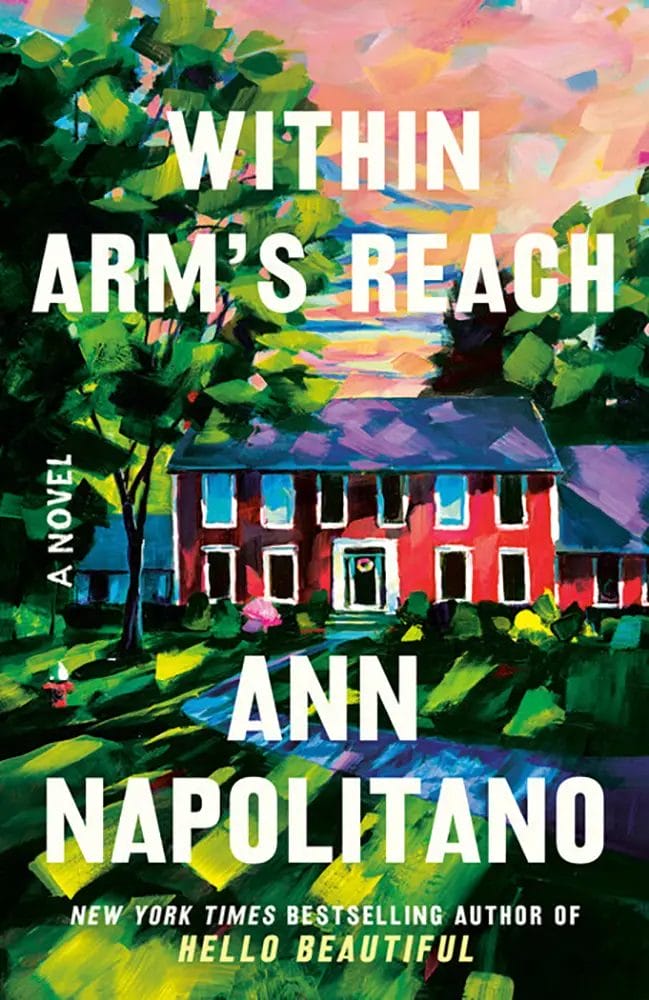
Hello Beautiful by this author is one of my favorite books, so when this, her first book, was rereleased I immediately picked it up. One the plus side, it isn’t a bad read, but, for me, it didn’t quite carry the same emotional impact.
This story follows three generations of an Irish Catholic family bound as much by love as by silence. They don’t talk about the hard things. They don’t name pain or loss. They just keep moving, letting all those unspoken things pool beneath the surface until they start shaping who they become. It’s a familiar rhythm in family sagas (and I can admit, my immediate family has the same problem) and Napolitano gives it her own thoughtful spin.
Told through multiple perspectives, the book moves between daughters, mothers, husbands and grandmothers, each revealing small cracks in the family’s emotional armor. It’s interesting to see how the avoidance of vulnerability passes down like an heirloom. Nobody means harm; they’re just doing what they learned. That thread gives the story a certain weight, and it’s what makes the book worth reading even when the emotional distance starts to frustrate you.
Catherine’s storyline stood out most to me. She’s the elderly matriarch who is tough as nails, but she’s also the one who notices the most how that reluctance to being vulnerable has affected the other generations of her family. Her sections had more of the introspective clarity that made Hello Beautiful such a heart-breaker.
Still, I found myself watching the story more than feeling it. The prose is lovely, but it reads like she’s still learning how to go for the gut. Hello Beautiful made me laugh, cry, think, and then cry again. That wasn’t the case here. I admired what she was going for, but I never quite crossed the line into caring deeply. And maybe that’s the point. This is a book about a family that can’t say how it feels, told in a style that keeps you at arm’s length. But if that’s the case, it mirrors its subject so well that it risks alienating the reader in the same way the family alienates each other. Clever, but also limiting.
On a technical level, it’s well done. Napolitano handles shifting points of view gracefully, giving each voice enough texture to feel distinct. The story never drags; it just flows quietly, building a subtle momentum that mirrors life itself. But if you’re coming in after Hello Beautiful, expecting that same tidal pull of emotion, this one may leave you wanting more. That said, it’s fascinating to read as a window into Napolitano’s evolution. You can see the seeds of her later themes here—grief, family legacy, the ways love survives silence.
So, is it worth reading? I’d say yes, especially if you’re a fan of her later work. It’s not as moving, but it’s thoughtful and sincere. It captures something true about families who love each other deeply but never quite manage to say the right thing. For me, I liked it but didn’t love it. I respected what it was doing. But it didn’t break me open the way I hoped it would.
Genre(s):
Other Bookish Tags:


